What GTA 6 Is Expected to Sell - and Why the Estimates Disagree So Much
Analyst forecasts run from 35 million to 85 million units. Where each number comes from, why the spread is so wide, and what Take-Two itself has actually guided to.
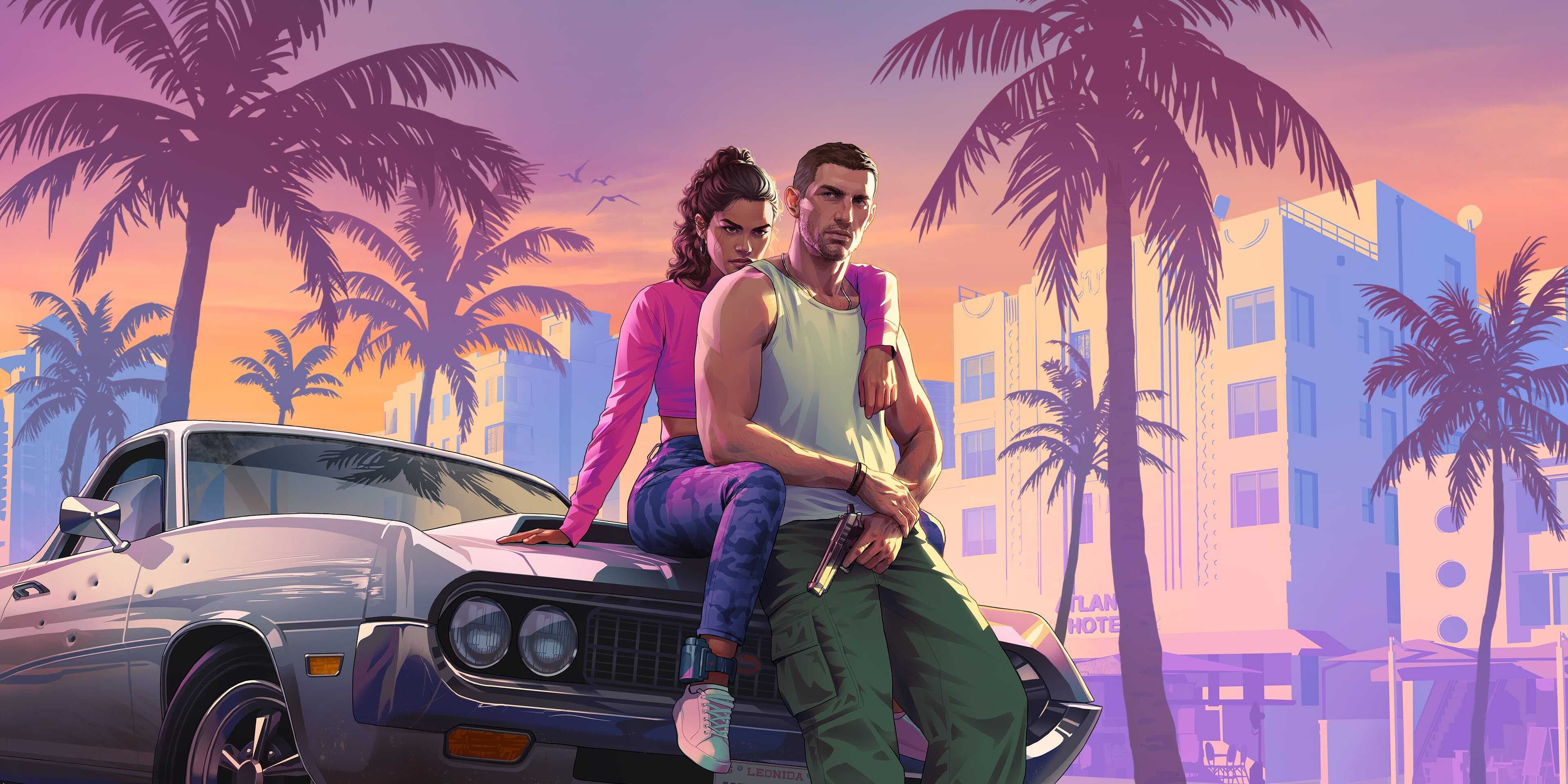
There is no shortage of GTA VI sales predictions, and they do not agree. Published analyst estimates run from about 35 million units to about 85 million, depending on the firm and - crucially - on the time window each one is measuring. Most of the apparent disagreement dissolves once you line the windows up.
| Source | Estimate | Window |
|---|---|---|
| Piper Sandler | ~35 million copies | Through April 2027 |
| DFC Intelligence | ~40 million copies, ~$3.2bn revenue | First year |
| Konvoy | ~85 million copies | First two months |
| Take-Two (official) | $8.0bn – $8.2bn net bookings | Fiscal year 2027 |
Only the last row is a company figure. The others are third-party models built from historical comparables, pre-order sampling and install-base estimates. Neither Rockstar nor Take-Two has published a unit forecast for GTA VI.
Why the spread is so wide
An 85 million two-month estimate and a 35 million twelve-month estimate cannot both be roughly right, so at least one model is badly wrong. The disagreement comes down to three assumptions that compound.
- Install base. GTA VI is current-gen only. Estimates of how many PS5 and Xbox Series consoles will exist by late 2026 differ by tens of millions, and every unit forecast is a share of that number.
- Attach rate. GTA V eventually sold to a large fraction of the PS3/360 install base, but it did so over years and across three console generations. Assuming that fraction lands in the first two months is the single most aggressive assumption in the optimistic models.
- Price elasticity. At $79.99 with a $99.99 tier, revenue per unit is higher than any prior comparable. Models that anchor on GTA V's dollar totals rather than its unit totals will overstate units and understate revenue, or vice versa.

The one number that is not an estimate
Take-Two has guided fiscal 2027 net bookings to $8.0–$8.2 billion, against $6.72 billion in fiscal 2026. That is a company statement made under securities disclosure rules rather than a modeller's projection, and it is the most reliable figure available.
It is also less precise than it looks for our purposes. Net bookings cover the whole company - NBA 2K, Zynga's mobile portfolio, Red Dead and GTA Online, and Borderlands among others - so backing a GTA VI unit number out of it requires assumptions about everything else. The guidance tells you that Take-Two expects roughly $1.3–$1.5 billion of incremental bookings in the launch year. It does not tell you how many copies that is.
| Figure | Value | Confidence |
|---|---|---|
| FY2026 net bookings | $6.72 billion | Reported - audited |
| FY2027 guidance | $8.0bn – $8.2bn | Company guidance |
| Implied incremental bookings | ~$1.3bn – $1.5bn | Arithmetic on the above |
| Share attributable to GTA VI | Not disclosed | Unknown |
| GTA VI unit forecast | Not disclosed | Unknown |
The comparables people reach for
Almost every model leans on GTA V, and it is worth being precise about what that comparison does and does not support. GTA V launched in September 2013 on PS3 and Xbox 360, then shipped again on PS4/Xbox One in 2014, PC in 2015, and PS5/Xbox Series in 2022. Its lifetime figure is the product of a decade and four platform launches.
GTA VI launches on two platforms with no announced PC version. Any model that treats GTA V's lifetime total as a first-year target for GTA VI is comparing a decade to a quarter. The models that do this are the ones producing the highest numbers.
The most defensible way to read all of this: GTA VI will very probably have the largest opening in entertainment history by revenue. Any specific unit number attached to that claim is a model output, not a fact.
What could make the optimistic case right
- Pre-order volumes that materially exceed any prior game, which the Q1 and Q2 bookings lines would start to reveal.
- The $99.99 Ultimate Edition taking a large share of the mix, raising revenue per unit well above the $79.99 assumption.
- Genuinely broad appeal outside the core games audience - the specific thing the Netflix premiere appears designed to test.
- A console hardware surge in the launch quarter, which historically follows a system-selling exclusive.
What could make the pessimistic case right
- Current-gen-only distribution capping the addressable audience harder than models assume.
- The $79.99 price shifting purchases into the post-launch discount window rather than the launch window.
- No online mode at launch, removing the recurring-spend engine that made GTA V's tail so long.
- Any slip past November 19, which would push the launch out of fiscal 2027 entirely and invalidate every model at once.

How these models are actually built
It helps to know what an analyst is doing when they produce a number, because the method explains the disagreement better than any individual assumption does. Almost all of these forecasts are the same three-step calculation with different inputs.
- Estimate the addressable install base at launch - how many PS5 and Xbox Series consoles will exist in November 2026, and in which regions.
- Apply an attach rate - what fraction of that base buys this specific game in the window being measured. This is where the models diverge most violently.
- Multiply by an average selling price, blending Standard and Ultimate, discounting, and regional price differences.
Step two carries almost all the uncertainty. A model assuming a 25% two-month attach rate and a model assuming 10% produce answers that differ by a factor of two and a half, and neither assumption is obviously unreasonable because nothing at this scale has been measured before.
| Input | Reasonable range | Effect on the answer |
|---|---|---|
| Install base at launch | Tens of millions of units of spread | Sets the ceiling |
| Two-month attach rate | Roughly 10% to 25% | The dominant source of disagreement |
| Blended selling price | Below $79.99 after regions and bundles | Shifts revenue, not units |
| Physical/digital split | Affects timing more than totals | Minor |
| Hardware bundles | Unannounced | Could raise units materially |
What GTA V actually did, and over what period
GTA V is the reference point for every model, and it is routinely cited without its timeline, which makes it misleading. Its lifetime figure is the product of a decade and four separate platform launches, not of a launch window.
| Milestone | When | Note |
|---|---|---|
| Launch on PS3 and Xbox 360 | September 2013 | Record-setting opening for its era |
| PS4 and Xbox One release | November 2014 | A second full launch, 14 months later |
| PC release | April 2015 | A third, 19 months after console |
| PS5 and Xbox Series release | March 2022 | A fourth, 8.5 years after launch |
| Continued catalogue sales | 2013–present | Still selling meaningfully more than a decade on |
GTA VI has one launch, on two platforms, with no announced PC version. Comparing its first quarter to GTA V's lifetime is comparing a quarter to a decade - and the models producing the largest numbers are the ones doing exactly that.
The recurring-spend question nobody can model
GTA V's commercial significance was never really the box sales. GTA Online generated recurring revenue for over a decade and turned a game into an annuity. Every long-run forecast for GTA VI implicitly assumes something similar arrives.
Rockstar has described GTA VI as a single-player experience and has announced no online component at launch. That does not mean one will never exist - but it does mean every model projecting years of recurrent spending is projecting a product that has not been announced.
Distinguish two very different claims: 'GTA VI will have the biggest launch in history' rests on pre-order evidence and is well supported. 'GTA VI will out-earn GTA V lifetime' rests on an unannounced online mode and is not.
What to watch in the numbers we will actually get
Between now and March 2027 there are four reporting events that will progressively replace estimates with disclosure. None will hand over a unit figure, but together they narrow the range considerably.
| Event | Timing | What it settles |
|---|---|---|
| Q1 FY2027 results | August 7, 2026 | Whether the first five days of pre-orders moved the needle |
| Q2 FY2027 results | Early November 2026 | A full quarter of pre-orders, immediately pre-launch |
| Q3 FY2027 results | February 2027 | The launch quarter itself - the number that matters |
| Any Rockstar milestone announcement | Days after launch | Rockstar has historically published opening-week records |
That last row is worth flagging. Rockstar has previously published launch records directly when they were impressive - a practice that tends to produce the first hard number faster than any earnings cycle does.
Nobody knows, including Rockstar. Published analyst estimates range from 35 million to 85 million depending on the time window measured, and none of them are company figures.
No unit target. Take-Two has guided fiscal 2027 net bookings to $8.0–$8.2 billion, which covers the entire company rather than GTA VI alone.
On lifetime units, that would take years and probably a PC release. On opening revenue, almost certainly - the price is higher and the anticipation is larger.
Loosely. Pre-orders skew toward committed buyers who would have purchased anyway, so they measure enthusiasm better than they measure total demand.
Extrapolations from pre-order sampling, not from disclosure. They are plausible arithmetic on plausible assumptions, and no more reliable than the assumptions underneath.
Keep reading

Take-Two's August 7 Earnings: The First Hard Numbers on GTA 6 Demand
The quarter ended June 30 - five days after pre-orders opened. What Take-Two has already guided to, what the report can and cannot tell us, and why the Friday slot is unusual.
Read more
GTA 6 at $79.99: How Rockstar Set the New Ceiling for AAA Pricing
Two editions, no deluxe tier, no physical collector's set. What Rockstar actually priced, how it compares to twenty years of console pricing, and what analysts think follows.
Read more
How November 19 Rearranged the Entire 2026 Release Calendar
Publishers spent a year moving around a date Rockstar moved twice. Why September and October are overloaded, why November and December are empty, and who is still standing in the blast radius.
Read more